
I’ve read this book many times, for enjoyment as much as information. The wit, superb writing style, and breadth of information are all breathtaking as an orchestrator and professor takes you on a tour through the orchestra. But it’s really not an orchestration manual, in that it doesn’t lay out sample after sample with hard facts and systematic information. Rather, Del Mar has a system of his own, that’s more like taxonomy than orchestration. Highly recommended.
Related Posts
ORCHESTRATION TIP: VIOLIN HARMONIC DOUBLE-STOPS
Harmonic double-stops are possible on string instruments; but they require some care from the orches
Orchestration Tip: Marcato is NOT a Nothingburger!
A friend of mine recently commented that if he scored a quarter note with a marcato accent at the st
ORCHESTRATION TIP: CLARINET OVERTONES IN WOODWIND HARMONY
(Adapted from 100 LAST Orchestration Tips, planned for release in late 2026) The clarinet’s lack of
ORCHESTRATION TIP: BASS CLARINET – CONCERT PITCH SCORING
When creating a full score in concert pitch, always use bass clef on bass clarinet staves for the co
ORCHESTRATION TIP: C CLARINET – TO USE OR NOT TO USE
(Adapted from 100 LAST Orchestration Tips, planned for release in late 2026) Despite claims of its o
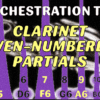
ORCHESTRATION TIP: CLARINET EVEN-NUMBERED PARTIALS
(Adapted from 100 LAST Orchestration Tips, planned for release in late 2026) Despite the emphasis by

ALTO CLEF READING COURSE ORIENTATION
Welcome to the Orchestration Online Alto Clef Reading Course, designed to quickly and permanently im
ALTO CLEF READING, UNIT 1: PITCH RECOGNITION
FINDING A USEFUL SYSTEM When I was just about 14, I switched over from the violin to viola in my jun