
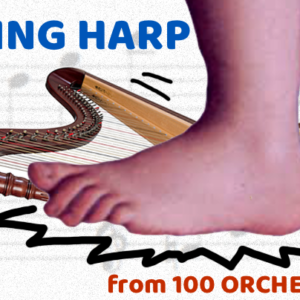
Harp – “Stomping” Notes

Harp – “Stomping” Notes

Rapidly repeated notes on harp will result in a buzzing sound as fingers touch already vibrating strings. Some harpists call this “stomping.” This is a simple, incredibly important fact which is not in any orchestration manual I own, and it’s especially true with the lower, more widely vibrating strings. The orchestrator may score a harp…
Read more…

Video Tip of the Week: Timpani Tuning

Video Tip of the Week: Timpani Tuning

A video installment in my daily series of tips. Please follow me on Twitter for the Orchestration Online Tip of the Day at @OrchestrationOL, or join the Orchestration Online Facebook group for feedback, resources, and advice. Tip of the Day for this week: Monday, December 31: Proofing by Instrumental Section Tuesday, January 1: Where to…
Read more…

Timpani – Marking Tuning

Timpani – Marking Tuning

When composing for timpani, mark the required tuning at the start of your piece, and indicate changes in the score. Some composers will even make a little chart of the actual pitches in headless mini-notes – but I’ve found that it’s easiest just to write them out as technique text above the staff, in ascending…
Read more…

Flute – Lowest Octave

Flute – Lowest Octave

The lowest octave of the flute is tricky to balance, but effective if handled correctly. The conventional wisdom is to avoid using this register unless very thinly accompanied – but it’s more complicated than that, and an orchestrator with a keen ear can find unexpected opportunities. In the following two excerpts from movement 2 of…
Read more…

Bass Clarinet – Most Flexible Auxiliary Wind

Bass Clarinet – Most Flexible Auxiliary Wind

Never underestimate the usefulness of the bass clarinet: perhaps the most flexible of all auxiliary winds. If I were told that my small orchestra commission allowed for only one dedicated auxiliary player, I would probably choose the bass clarinet every time. Why? Well, if we look at the most commonly used auxiliaries of the other…
Read more…

Parts – Ideal Cue Material

Parts – Ideal Cue Material

When choosing a cue, select material from a player in close proximity to where your musician is seated. Of course, the cue should be composed of a thematic gesture first of all, and if there isn’t a good snatch of melody, then an obvious bit of chord or high note. The following example is excerpted…
Read more…

Parts – Assigning Cues

Parts – Assigning Cues

When extracting parts, assign cues sparingly to a pro or semi-pro level work. Best cues are after: a. long stretches of over 30 bars b. extended passages of metric complexity, and/or changes of meter and tempo c. a very long cadenza. It’s not necessary to pepper your score with cues after every tacet. Pro orchestra…
Read more…

Scores – Proofing by Instrumental Section

Scores – Proofing by Instrumental Section

When finalizing an extended orchestral project, proof each instrumental section for careless errors. With Sibelius, you can do this very easily with Focus on Staves, and isolate your screen view to a subset of the available instruments. I’m always on the lookout for missing slurs and dynamics, incomplete technique directions (forgetting to end a passage…
Read more…

Scores – Rehearsal Mark Placement

Scores – Rehearsal Mark Placement

Use rehearsal marks foremost in places where the conductor will need to fix things – not necessarily always at the beginnings of sections. My rule of thumb is trouble spots/intricate textures first; changes of tempo, key, and meter second; and beginnings of sections last (these criteria often overlap, with two or even all three satisfied…
Read more…

Scores – Layout Traps

Scores – Layout Traps

Two last warnings about score layouts, traps into which composers may easily fall. In the top example, Percussion 1 is changing from a triangle to a snare. Sibelius will blithely omit the blank staves and play back the correct instruments – but the conductor’s eye may glance across the page and think that the triangle…
Read more…