Duration of Double Bass Pizzicato Notation

Duration of Double Bass Pizzicato Notation

(Tip no. 85 from 100 MORE Orchestration Tips, to be released in 2018) Recently, I’ve seen a great deal of concern being focused on the scoring of pizzicato in double bass parts by composers in the Orchestration Online community. Of special focus are the precise nuances of duration. The following example was recently posted asking…
Read more…
Timpani Range Qualities

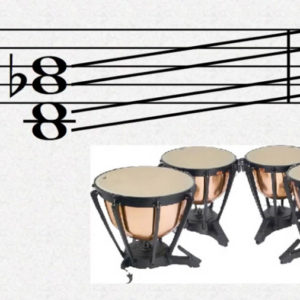
Timpani Range Qualities

(Tip no. 60 from 100 MORE Orchestration Tips, to be released in 2018) The range of timpani pitches has an emotional arc. In Tip 53 of my previous book 100 Orchestration Tips, titled “Timpani Tuning Shortcuts,” I provided a quick and easy way to check the range of possible pitches using the standard four timpani…
Read more…

Saxophone Score Placement

Saxophone Score Placement

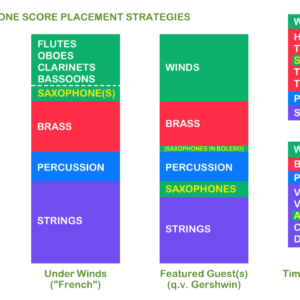
(Tip no. 21 from 100 MORE Orchestration Tips, to be released in 2018) Score placement is a tricky and evolving thing for visitors to the concert orchestra – especially when that visitor isn’t a soloist, but a general contributor to orchestral texture and function. The saxophone can be particularly puzzling, and not just to developing…
Read more…

Harp – Range of Multiple Harmonics

Harp – Range of Multiple Harmonics

(Tip no. 68 from “100 Orchestration Tips,” Part 4: Harp) Left hand multiple harmonics are only practical up to around middle C. Higher than that, the hand position prevents them from speaking with ease. This is a tip that I’ve not seen in ANY orchestration manual anywhere, period. Most manuals tell you that the right…
Read more…

Trombone Wars – The Tenor Clef (I – VI – VII)

Trombone Wars – The Tenor Clef (I – VI – VII)

Few topics on the Orchestration Online Facebook page have incited more controversy and strong feelings than the use of the tenor clef for trombones. There’s a spectrum of history and craft that must be absorbed before one can honestly decide whether the tenor clef should be utilised or annihilated.

Woodwinds – Doubling Pros and Cons

Woodwinds – Doubling Pros and Cons

(Tip no. 3 from 100 Orchestration Tips) The question of doubling for winds comes up quite often for an orchestrator-in-progress. Strange to say, the simple act of putting two of the same type of wind instrument on the same note can have broad implications for the type of sound you want in the orchestra. You…
Read more…

Woodwind Auxiliary Changeovers

Woodwind Auxiliary Changeovers

Let’s say that you’re second oboist for a mid-sized orchestra. You play a lot of cor anglais parts as a result. On one new work, you’re piping away at some very good writing for second oboe – clean, well-supported, and easy to […]

Extreme Auxiliary Instruments in Film Music

Extreme Auxiliary Instruments in Film Music

(Tip no. 5 from 100 Orchestration Tips) For every orchestral family, there are always auxiliary instruments: holdovers from older periods, like the viola d’amore or the oboe d’amore; or extensions of range like the piccolo or bass clarinet. Then there are the extreme auxiliaries, which push the range of the families in strange directions, usually…
Read more…

Heckelphone/Bass Oboe – The Realities

Heckelphone/Bass Oboe – The Realities

My recent experiences in booking wind players for my orchestration course has brought up a very important tip about heckelphone and bass oboe, a factor involved in the use of these instruments that you also won’t find in the orchestration manuals. I realise, of course, […]